
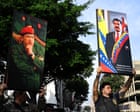
US Forces Capture Venezuelan President Nicolás Maduro, Sparking Partisan Divide
In a dramatic turn of events, Venezuelan President Nicolás Maduro was captured by US forces in Caracas on Saturday, marking a significant development in the ongoing political crisis in the South American nation. The arrest follows a 2020 US indictment charging Maduro with narco-trafficking offenses, and the reaction from American politicians has been starkly divided along partisan lines.
Administration officials and Republican lawmakers have cheered the capture as a victory in the fight against corruption and drug trafficking, with Secretary of State Antony Blinken stating that Maduro's "reign of terror is over." However, Democrats have expressed concerns that the action could risk pulling the US into another prolonged military conflict, with House Foreign Affairs Committee Chairman Gregory Meeks saying the move "risks destabilizing an already fragile situation."
The arrest of Maduro, who has ruled Venezuela with an iron fist since 2013, marks a significant escalation in the long-standing tensions between the US and the South American nation. Maduro's government has been accused of widespread human rights abuses, electoral fraud, and economic mismanagement, leading to a severe humanitarian crisis and the exodus of millions of Venezuelan refugees.
In 2019, the Trump administration recognized opposition leader Juan Guaidó as the legitimate president of Venezuela, a move that was followed by numerous attempts to oust Maduro from power. The latest operation, carried out by US special forces, appears to be the culmination of these efforts.
The capture of Maduro has significant implications for the political landscape in Venezuela and the region as a whole. With Maduro in US custody, the opposition and its international allies will likely intensify their push for a transition to a more democratic, stable government. However, Maduro's supporters, including the Venezuelan military, may resist any attempts to remove him from power, raising the specter of further unrest and potential violence.
Moreover, the partisan divide in the US response to Maduro's capture reflects the broader political tensions surrounding foreign policy and the use of military force. Republicans have long advocated for a more assertive approach to dealing with authoritarian regimes like Maduro's, while Democrats have generally favored diplomacy and multilateral cooperation.
The Biden administration, which has sought to distance itself from the more confrontational policies of the Trump era, now finds itself navigating a complex and delicate situation. On the one hand, the capture of Maduro may be seen as a victory in the fight against corruption and drug trafficking. On the other hand, the potential for escalation and the risk of dragging the US into another protracted conflict in the region present significant challenges.
As the situation continues to unfold, it will be crucial for the US government to carefully weigh its options and work with regional partners to find a peaceful, democratic solution that addresses the needs and aspirations of the Venezuelan people. The stakes are high, not only for the future of Venezuela but also for the broader geopolitical landscape in Latin America and the Caribbean.
📰


