
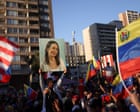
Showdown in Venezuela: Machado Vows to Return as Maduro Faces Criminal Charges
In a dramatic turn of events, Venezuela's political landscape has become a battleground, pitting opposition leader María Corina Machado against the deposed president, Nicolás Maduro. Amidst the chaos, Machado has vowed to return to the country, even as Maduro faces a shocking criminal indictment unveiled by the U.S. government.
Machado, a prominent opposition figure, recently spoke to Fox News, revealing that she has not communicated with U.S. President Donald Trump since the attack that led to Maduro's capture. However, she expressed a willingness to share a Nobel Peace Prize with Trump, should the two work together to remove Maduro from power.
The U.S. government's allegations against Maduro are indeed grave. The deposed president has been accused of involvement in a "narco-terrorism conspiracy," drug trafficking, and corruption. According to the criminal indictment, Maduro allegedly collaborated with the Revolutionary Armed Forces of Colombia (FARC) to smuggle tons of cocaine into the United States.
Maduro, who has vehemently denied the charges, now faces the prospect of extradition to the U.S. to stand trial. His capture, orchestrated by U.S. forces, has been widely condemned by Venezuela's allies and foes alike, who have denounced it as a "crime of aggression" at a recent United Nations meeting.
The situation in Venezuela has been volatile for years, with the country mired in a deep economic crisis, political turmoil, and a humanitarian disaster. Maduro's socialist government has been accused of suppressing dissent, mismanaging the economy, and causing widespread shortages of food and medicine.
Machado, who has long been a vocal critic of Maduro's regime, has pledged to return to Venezuela despite the risks. Her defiant stance reflects the determination of the opposition to challenge Maduro's grip on power and restore democracy in the country.
The implications of Maduro's capture and the potential extradition to the U.S. are far-reaching. It could further destabilize the country, leading to a power vacuum and potentially sparking violence between Maduro's supporters and the opposition. The international community, too, will be closely watching the developments, as the fate of Venezuela could have ripple effects across the region.
Machado's willingness to work with Trump, even to the point of sharing a Nobel Peace Prize, is a remarkable gesture that underscores the gravity of the situation. The two leaders, despite their differences, may be forced to collaborate in order to bring about a peaceful transition of power in Venezuela.
However, the path forward is far from clear. Maduro's supporters are unlikely to simply accept his downfall, and the potential for a prolonged political crisis looms large. Furthermore, the U.S. involvement in the affair has raised concerns about the violation of Venezuela's sovereignty and the potential for further international intervention.
As the world watches the unfolding events in Venezuela, the stakes have never been higher. The future of the country, its people, and the region as a whole hang in the balance. Machado's vow to return and her willingness to work with Trump are a testament to the determination of the opposition to bring about a peaceful resolution to the crisis.
Ultimately, the resolution of the Venezuelan crisis will require a delicate balance of international diplomacy, domestic political maneuvering, and a commitment to democracy and the rule of law. The road ahead is fraught with challenges, but the fate of Venezuela's people hangs in the balance, and the world will be watching closely.
📰


