
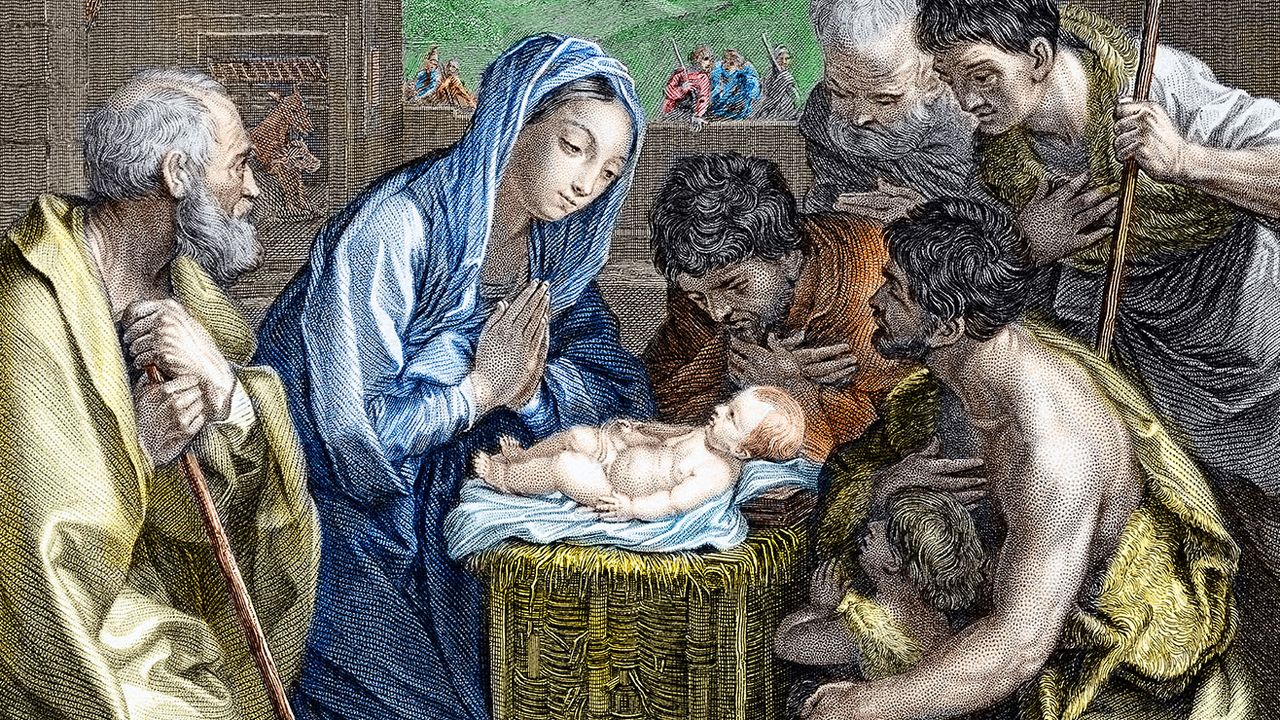
'Gospel stories themselves tell of dislocation and danger': A historian describes the world Jesus was born into
The birth of Jesus, as recounted in the Gospels, was marked by upheaval and uncertainty. Mary and Joseph's journey to Bethlehem, the threat posed by King Herod, and the flight into Egypt - these events paint a vivid picture of the turbulent times into which the Savior entered the world.
According to historian Robin M. Jensen, professor of the history of Christian art and worship at the University of Notre Dame, the world of ancient Judea was far removed from the peaceful, picturesque nativity scenes often depicted in modern Christmas celebrations. "The Gospel stories themselves tell of dislocation and danger," Jensen said. "They show us a world in flux, where the powerful seek to maintain control through violence and oppression."
Indeed, the period surrounding Jesus' birth was a time of great political and social unrest in the region. Judea, a client state of the mighty Roman Empire, was a powder keg of competing factions and vying power structures. The Herodian dynasty, installed by the Romans, ruled with an iron fist, brooking no dissent or challenge to their authority.
"Herod the Great, in particular, was a ruthless and paranoid ruler," Jensen explained. "When he heard rumors of a 'king of the Jews' being born, he ordered the massacre of all male children under the age of two in Bethlehem, hoping to eliminate this perceived threat to his throne." This chilling event, recounted in the Gospel of Matthew, underscores the volatility of the times.
Adding to the turmoil was the heavy burden of Roman occupation. Judea had been absorbed into the expanding Roman Empire, and its people were subject to harsh taxation, strict social controls, and the ever-present threat of military force. "The Romans were the dominant power in the region, and they were not above using brutal tactics to maintain their grip on the local population," Jensen said.
In this context, the birth of Jesus took on a profound significance. The Gospels present him as a savior, a "king of the Jews" who would deliver his people from oppression and usher in a new era of peace and justice. But this messianic message was inherently subversive, challenging the authority of both Herod and the Roman overlords.
"The Gospels are not simply feel-good stories," Jensen emphasized. "They are accounts of a radical figure who emerged in a time of great upheaval, offering an alternative vision of the world - one rooted in compassion, forgiveness, and a fundamental rejection of the status quo."
This alternative vision, however, would come at a great cost. The Gospels portray Jesus as a man of sorrows, facing persecution, betrayal, and ultimately, crucifixion at the hands of the Roman authorities. His life and death, in many ways, mirrored the broader struggles of the Jewish people under Roman rule.
Yet, it is precisely this context of dislocation and danger that gives the Christmas story its enduring power and relevance. "The Gospels remind us that the message of peace and goodwill that we associate with Christmas has always been a challenging one, born out of the realities of a fractured and often violent world," Jensen said.
Indeed, as we look around at the conflicts, divisions, and crises of the modern era, the parallels between the world of ancient Judea and our own become increasingly stark. "The struggles faced by Mary, Joseph, and the infant Jesus resonate with the experiences of countless refugees, migrants, and marginalized communities today," Jensen noted. "Their story is a testament to the resilience of the human spirit in the face of adversity."
In this light, the Christmas story becomes not just a celebration of the birth of a divine savior, but a profound meditation on the human condition - on our capacity for both cruelty and compassion, our yearning for justice and peace, and our ability to find hope in even the darkest of circumstances.
"The Gospels remind us that the true spirit of Christmas is not one of passive acquiescence, but of active resistance to the forces of oppression and injustice," Jensen said. "It is a call to build a world where the promise of 'peace on earth' is not just a wistful dream, but a tangible reality."
As we gather to mark the birth of Jesus, let us remember the tumultuous context into which he entered, and let it inspire us to work towards a more just, equitable, and peaceful world. For in doing so, we honor not just the savior, but the enduring human spirit that has the power to transform even the most daunting of circumstances.
📰


