
Corporation For Public Broadcasting Dissolves After Decades of Serving US Public Media
In a shocking move that has reverberated across the media landscape, the Corporation for Public Broadcasting (CPB), the nonprofit organization charged by Congress with supporting and distributing funding to National Public Radio (NPR), the Public Broadcasting Service (PBS), and other vital public radio and television stations nationwide, has announced that it will be dissolving after nearly 60 years in operation.
The decision to shutter the CPB comes in the wake of massive federal funding cuts that were implemented under the administration of former President Donald Trump. During his time in office, Trump repeatedly proposed eliminating all federal funding for public media, describing it as an unnecessary government expense. While Congress repeatedly rejected these efforts and maintained CPB's budget, the cumulative effect of these funding threats took a significant toll on the organization.
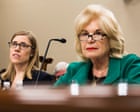
"It is with profound sadness that we announce the dissolution of the Corporation for Public Broadcasting," said CPB Board Chair Patricia Harrison in a statement released on Monday. "For close to six decades, the CPB has been the backbone of public media in America, ensuring that communities across the country have access to high-quality educational, informational, and cultural programming. However, the severe and sustained cuts to our federal appropriation have left us with no choice but to cease operations."
The CPB was established by an act of Congress in 1967 with the mission of facilitating the growth and development of public media services throughout the United States. As the steward of the federal government's investment in public broadcasting, the organization has played a crucial role in supporting the operations of NPR, PBS, and hundreds of local public radio and TV stations.
Through a complex system of grants and direct funding, the CPB has provided a stable source of revenue that has allowed public media outlets to fulfill their mandate of serving the public interest, rather than relying solely on commercial advertising or viewer/listener donations. This model has been credited with fostering a thriving ecosystem of diverse, high-quality programming that has informed, educated, and entertained generations of Americans.
"The loss of the CPB will be felt across the entire public media landscape," said NPR CEO John Lansing. "Without its stabilizing influence and its ability to channel federal resources to local stations, the future of public radio and television is deeply uncertain. We will work tirelessly to ensure that the vital services we provide to communities nationwide can continue, but the road ahead will be challenging."
The demise of the CPB also raises significant questions about the future of public media's role in American society. For decades, public broadcasters have been a bulwark against the growing commercialization and consolidation of the media industry, providing a crucial alternative to profit-driven news and entertainment.
"Public media has always been a unique and essential part of the American media ecosystem," said PBS President and CEO Paula Kerger. "We give voice to underrepresented communities, we provide educational resources to students and teachers, and we tackle complex issues with depth and nuance. Without the CPB to support and protect that mission, the future of public media hangs in the balance."
The loss of the CPB will likely have the most immediate and severe impact on smaller, rural, and minority-serving public media outlets that have relied on its grants and support to stay afloat. These stations often lack the robust donor bases and corporate sponsorships that have allowed larger, urban public media organizations to weather funding crises.
"We're talking about the potential collapse of hundreds of public radio and TV stations, many of which serve as the only source of local news, educational programming, and cultural content for their communities," said Northern California Public Media CEO Nancy Dobbs. "These stations are lifelines, especially in underserved areas, and their disappearance would be devastating."
Beyond the practical implications, the dissolution of the CPB also represents a profound ideological shift in how the United States values and supports public media. For generations, public broadcasting has been viewed as a public good, a shared resource that enriches civil society and promotes the free flow of information and ideas.
"The CPB was founded on the principle that access to high-quality, non-commercial media is essential for a healthy democracy," said former CPB president Patricia Harrison. "By eliminating this institution, we are undermining a core tenet of American civic life. It's a profound loss, both for public media consumers and for the country as a whole."
As the CPB prepares to wind down its operations, public media advocates are scrambling to find alternative sources of funding and support to sustain the critical services provided by NPR, PBS, and local stations. Some have called for the creation of a new, independent public media trust funded through alternative revenue streams, while others have urged Congress to reinstate federal appropriations for public broadcasting.
"This is a pivotal moment for public media in America," said Lansing. "We have to work quickly to ensure that the important work we do – informing the public, educating our children, and reflecting the diversity of our nation – can continue. The stakes have never been higher."
📰


