
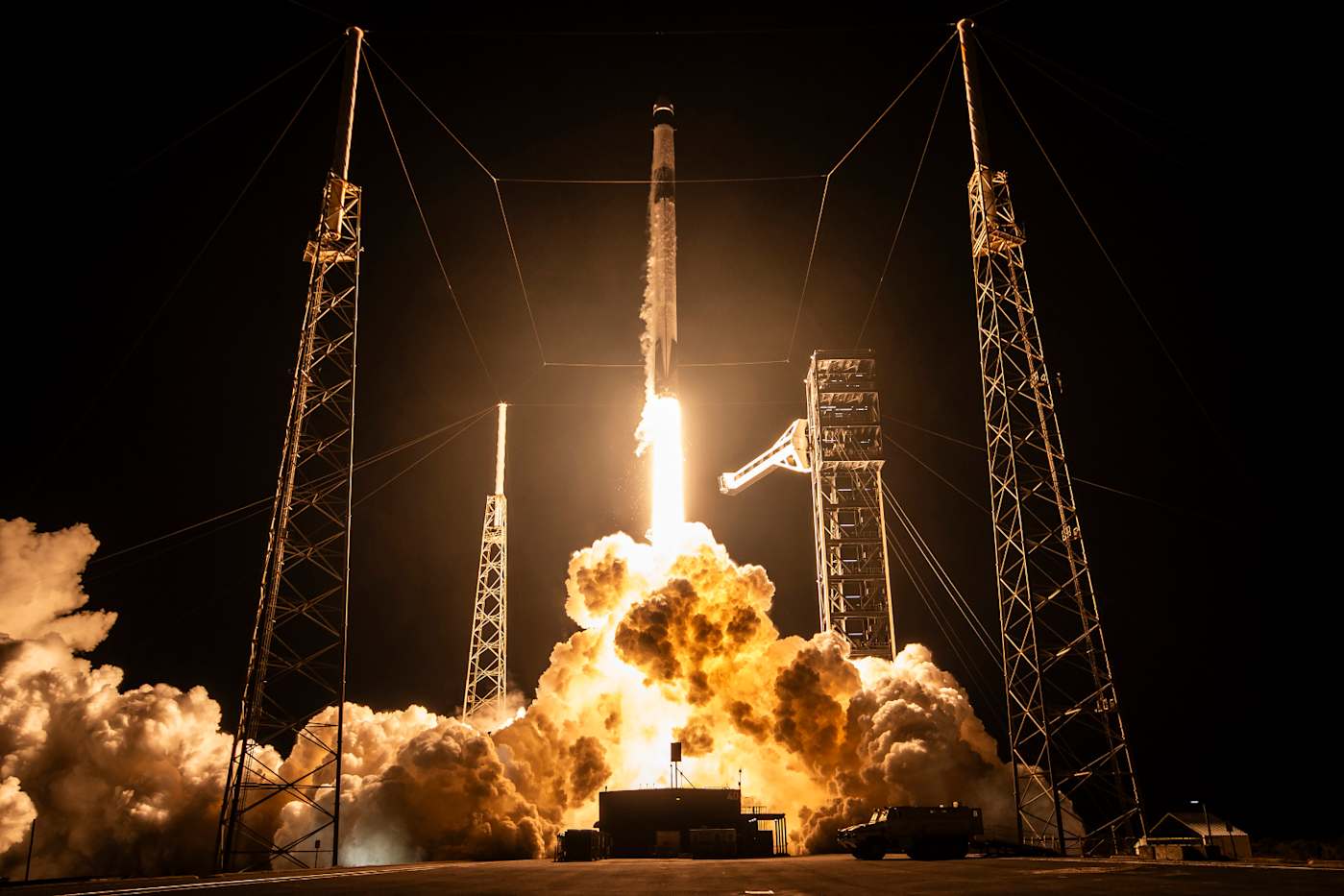
NASA SpaceX Crew-12 Mission Docks with the International Space Station
On February 13, at 5:15 AM Eastern, the Crew-12 mission, SpaceX's 20th human spaceflight, successfully launched from Cape Canaveral in Florida. After a 34-hour journey, the Dragon capsule carrying four astronauts docked with the International Space Station (ISS) on February 14 at 3:15 PM.
The four crew members include NASA astronauts Jessica Meir and Jack Hathaway, European Space Agency (ESA) astronaut Sophie Adenot, and Roscosmos cosmonaut Andrey Fedyaev. They will be joining the three remaining passengers from the previous Crew-11 mission, which returned to Earth a month earlier than planned due to a medical issue with one of the crew members.
The Crew-12 astronauts are set to spend the next eight months on the ISS, where they will conduct a variety of scientific experiments and research projects. These studies will focus on areas like human health, as well as advancing technologies for future missions to the Moon and Mars.
One of the key experiments will examine how pneumonia-causing bacteria can lead to long-term heart damage, while another will investigate how a person's physical characteristics can affect blood flow during spaceflight. These findings could have important implications for the health and safety of astronauts on long-duration missions.
The Crew-12 mission marks an important milestone in the ongoing collaboration between NASA and SpaceX, as the two organizations continue to push the boundaries of human spaceflight. The successful launch and docking are a testament to the hard work and dedication of the teams involved, and they pave the way for future missions that will further our understanding of space and the challenges of living and working in the extreme environment of the ISS.
The Crew-12 mission is the latest in a series of crewed flights to the ISS, which has been continuously inhabited since 2000. The space station has served as a crucial hub for scientific research and exploration, hosting a wide range of experiments and providing a platform for testing new technologies and techniques that could be used in future deep-space missions.
One of the key advantages of the ISS is its microgravity environment, which allows researchers to study phenomena that are difficult or impossible to replicate on Earth. For example, the station's low-gravity conditions can be used to test new materials, study the effects of radiation on living organisms, and explore the fundamental principles of physics.
The Crew-12 mission will build on this legacy, with the astronauts expected to conduct a wide range of experiments and research projects during their time on the station. These efforts will not only advance our understanding of space and the human body, but they will also pave the way for future missions to the Moon, Mars, and beyond.
As the astronauts begin their work on the ISS, the world will be watching with keen interest. The Crew-12 mission represents the latest chapter in the ongoing story of human exploration and discovery, and it is a testament to the incredible capabilities of the teams at NASA, SpaceX, and other space agencies around the world.
Whether you're a seasoned space enthusiast or a newcomer to the field, the Crew-12 mission is sure to captivate and inspire. As the astronauts float weightlessly in the vastness of space, conducting groundbreaking research and pushing the boundaries of human knowledge, we are reminded of the incredible potential of space exploration and the remarkable feats that can be achieved when we work together towards a common goal.
So, as the Crew-12 astronauts begin their eight-month stay on the ISS, let us celebrate their accomplishments and look forward to the exciting discoveries and advancements that are sure to come. The future of space exploration is bright, and the Crew-12 mission is just the latest step in our ongoing journey to understand the mysteries of the cosmos.
📰