
The International Space Station Welcomes a Full Crew Once Again
After a month of operating with a reduced crew, the International Space Station (ISS) is now back to its full complement of seven astronauts. The arrival of four new crewmembers as part of the Crew 12 mission on February 14th has restored the station to its standard staffing level.
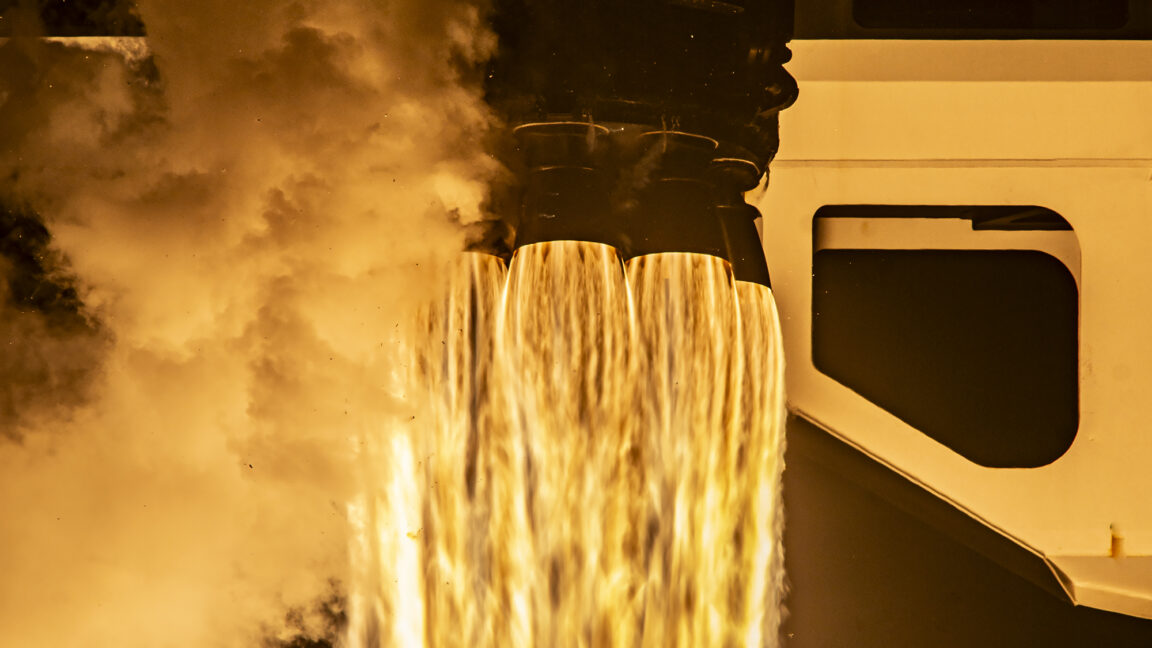
The Crew 12 mission, which launched from Kennedy Space Center in Florida, included Jessica Meir and Jack Hathaway of NASA, Sophie Adenot of the European Space Agency (ESA), and Andrey Fedyaev of Roscosmos, Russia's space agency. They docked their SpaceX Crew Dragon spacecraft with the ISS at 5:14 pm ET on Saturday evening, and the hatches were opened shortly after, allowing the new arrivals to join the existing crew.
This marks a return to the ideal operational capacity for the US Orbital Segment (USOS) of the ISS, which NASA has been working to maintain since the regular flights of the Crew Dragon began in late 2020. The USOS is the portion of the station operated and maintained by NASA and its international partner agencies, including astronauts from the United States, Canada, Europe, and Japan.
The fluctuating crew size on the ISS is a natural consequence of the ongoing crew rotation process. Astronauts typically spend around six months on the orbiting laboratory before returning to Earth, with new crews arriving to replace them. Private astronauts, such as those flying on commercial missions, may also make shorter visits to the station.
However, NASA has emphasized the importance of keeping at least four USOS astronauts on the ISS at all times. This ensures that the critical operations and maintenance tasks required to sustain the station can be adequately carried out, even as crew members come and go. The arrival of Crew 12 has now restored this baseline complement.
The significance of a full crew on the ISS goes beyond just maintaining the station's day-to-day functionality. With a full complement of astronauts, the scientific research and technological development work conducted on the orbiting laboratory can be expanded and optimized. More hands on deck mean more hours can be dedicated to the numerous ongoing experiments and projects that take advantage of the unique microgravity environment.
"Having a full crew on the International Space Station is critical for maximizing the scientific research and technological developments that can be achieved in this unique orbiting laboratory," said NASA Administrator Bill Nelson. "The dedicated efforts of these astronauts, from diverse international backgrounds, will drive forward our understanding of the universe and push the boundaries of what's possible in space."
The Crew 12 mission is the latest in a series of crew rotations that have kept the ISS continuously occupied since its first long-term residents arrived in November 2000. Over the past two decades, the station has hosted astronauts from 19 different countries, working together to advance scientific knowledge and demonstrate the potential of human spaceflight.
This international collaboration is a hallmark of the ISS program, which has brought together space agencies from the United States, Russia, Europe, Japan, and Canada. The station's operations are managed through intricate agreements and procedures, requiring close coordination between the partner nations.
The return to a full crew complement also comes at a pivotal moment for the ISS, as the outpost approaches the end of its planned operational lifetime. After over 20 years of continuous human presence, the future of the ISS beyond 2024 remains uncertain. NASA and its international partners are currently evaluating options for extending the station's lifespan, while also considering the development of new commercial space stations to eventually replace it.
In the meantime, the astronauts of Crew 12 will join their colleagues in carrying out a diverse array of scientific experiments and technological demonstrations during their time on the orbiting laboratory. From medical research to materials science, the knowledge gained from these activities will help pave the way for future human exploration beyond low-Earth orbit, including NASA's ambitious plans to return humans to the Moon through the Artemis program.
With the ISS now back to its full crew size, the stage is set for an exciting period of scientific discovery and technological advancement in the realm of human spaceflight. As the world's premier microgravity research facility, the station will continue to serve as a critical platform for advancing our understanding of the universe and pushing the boundaries of what's possible in the vacuum of space.
📰