
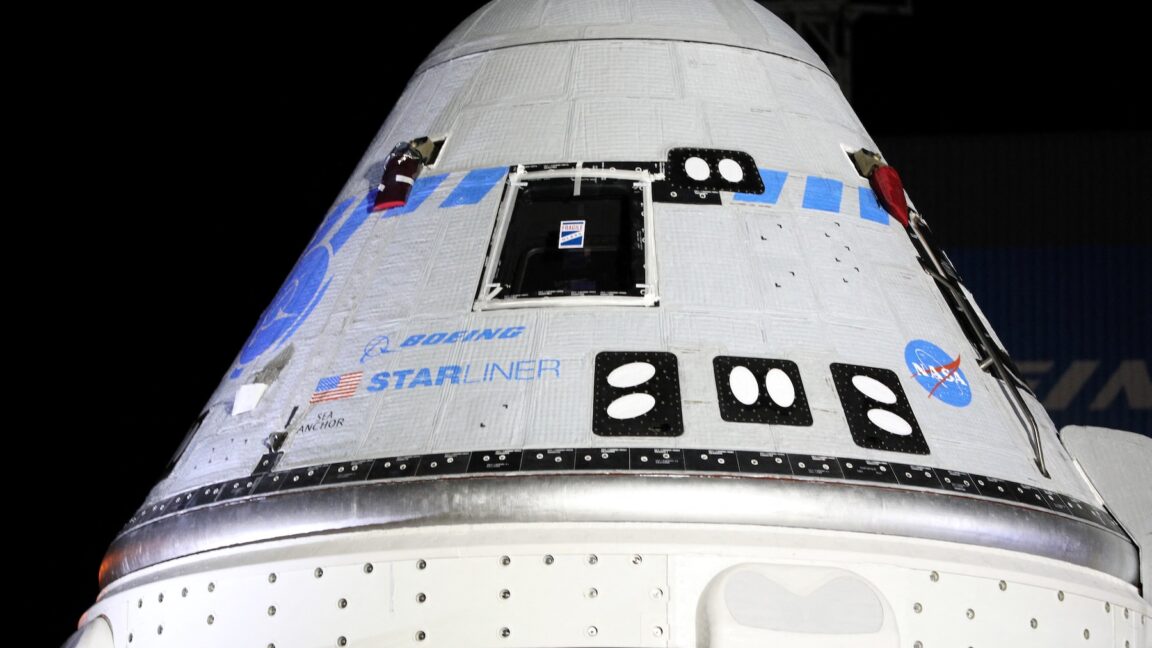
Safety Panel Raises Alarm Over NASA's Handling of Starliner Incident
In June 2024, the long-anticipated maiden crewed flight of Boeing's Starliner spacecraft finally took place, marking a significant milestone in the company's efforts to provide NASA with an alternative to the SpaceX Dragon for transporting astronauts to the International Space Station (ISS). However, the mission was far from smooth sailing, with a series of technical issues that raised serious concerns about the spacecraft's reliability and the agency's response.
The mission began with Starliner's launch from Cape Canaveral, Florida, carrying NASA astronauts Butch Wilmore and Suni Williams. The two-person crew expected a relatively short stay of one or two weeks on the ISS before returning to Earth. But as the capsule made its way to the orbital outpost, it quickly became clear that something was amiss.
Troubled Docking and Extended Stay
During the 27-hour journey to the ISS, the Starliner experienced problems with its maneuvering thrusters and suffered from persistent helium leaks. At one point, Wilmore, the Starliner's commander, even temporarily lost the ability to control the spacecraft's movements as it approached the space station for docking. Engineers scrambled to diagnose and address the issues, eventually recovering most of the thruster functionality and allowing the capsule to successfully dock with the ISS.
However, the problems were far from over. NASA officials determined that it was too risky to return Wilmore and Williams to Earth aboard the Starliner, given the technical challenges that had already emerged. As a result, the astronauts ended up remaining in orbit for an extended stay of nine months, finally returning home in March of the following year aboard a SpaceX Dragon spacecraft.
Lack of Transparency and Oversight Concerns
Now, a safety advisory panel convened by NASA has raised concerns about the agency's handling of the Starliner incident, finding that the extent of the problems was not adequately communicated to the broader workforce. The panel's report suggests that this lack of transparency and open communication may have contributed to a perception that the issues were not as serious as they actually were.
"For the better part of two months last year, most of us had no idea how serious the problems were with Boeing's Starliner spacecraft docked at the International Space Station," the panel noted in its findings. "This uncertainty also filtered through NASA's workforce."
The implications of this lack of transparency are significant, as it raises questions about the agency's ability to effectively oversee the development and operation of critical spaceflight systems. If NASA's own workforce was not fully aware of the severity of the Starliner's issues, it raises concerns about the agency's ability to make informed decisions and maintain appropriate levels of safety and oversight.
Ongoing Challenges for Starliner and NASA
The Starliner incident comes at a critical juncture for both Boeing and NASA. The aerospace giant has been working for over a decade to develop the Starliner as a viable alternative to the SpaceX Dragon for transporting astronauts to the ISS, a program that has been plagued by setbacks and delays. The successful completion of the Crew Test Flight was seen as a crucial step in validating the Starliner's capabilities and paving the way for regular crewed missions.
However, the technical issues that arose during the mission and the subsequent concerns raised by the safety advisory panel have cast a shadow over the Starliner program. Boeing and NASA will need to address these challenges head-on, working to improve communication, transparency, and oversight to ensure the safety and reliability of the Starliner system.
For NASA, the Starliner incident highlights the broader challenges the agency faces in managing the development and operation of complex spaceflight systems. As the agency continues to rely on commercial partners like Boeing and SpaceX to provide crew transportation to the ISS, it must ensure that it maintains a strong, independent oversight role to identify and mitigate potential risks.
The safety panel's findings underscore the importance of transparent communication and effective collaboration between NASA, its contractors, and the broader space community. By fostering a culture of openness and accountability, the agency can better identify and address potential issues before they escalate into more serious problems.
Looking Ahead
As the space industry continues to evolve, with an increasing emphasis on commercial space transportation, the lessons learned from the Starliner incident will undoubtedly shape the future of human spaceflight. NASA and its partners must work to strengthen their processes, improve communication, and enhance safety protocols to ensure that the journey to space remains as safe and reliable as possible.
The Starliner incident serves as a stark reminder that the challenges of spaceflight are never fully conquered, and that vigilance, transparency, and a commitment to safety must remain the guiding principles of the space industry. By addressing the issues raised by the safety advisory panel, NASA and Boeing can work to restore confidence in the Starliner program and ensure that the future of human spaceflight remains bright.
📰