
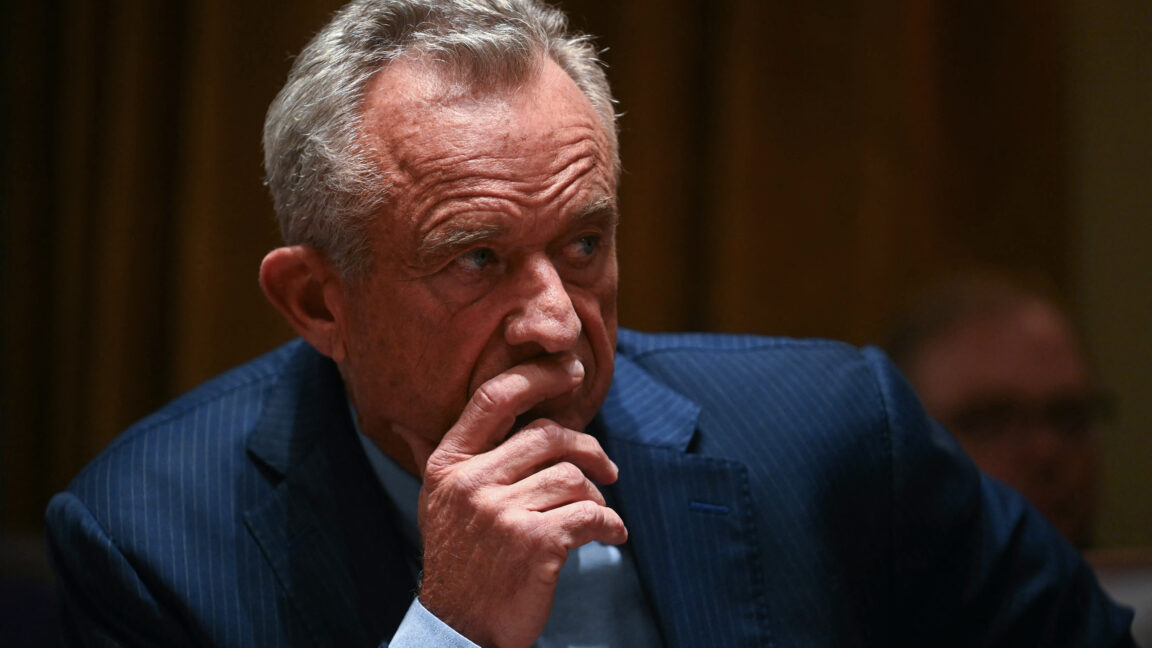
Robert F. Kennedy Jr.'s Alarming Control over U.S. Vaccine Policies
In a startling revelation, a lawyer for the Trump administration has asserted that Robert F. Kennedy Jr., the current Health Secretary, wields such vast and unchecked authority over the nation's vaccine policies that he is effectively "unreviewable." This means that Kennedy, a prominent anti-vaccine advocate, has the freedom to make sweeping changes to vaccination protocols, even to the point of potentially recommending that people forgo vaccines and expose themselves to deadly infectious diseases.
This alarming disclosure came to light during a lawsuit filed against Kennedy by the American Academy of Pediatrics, several other medical organizations, and three anonymous women. The plaintiffs are seeking to challenge a series of actions taken by Kennedy since he assumed the role of Health Secretary, including his unilateral modifications to COVID-19 vaccine policies, his dismissal of all 17 expert vaccine advisors at the Centers for Disease Control and Prevention (CDC), and his decision to drastically overhaul the CDC's childhood vaccine schedule.
Kennedy's Controversial Vaccine Agenda
The lawsuit alleges that Kennedy has replaced the CDC's expert vaccine advisors with hand-picked anti-vaccine advocates, a move that has raised significant concerns within the medical community. Furthermore, he has implemented a new vaccine schedule that aligns more closely with the policies of the small country of Denmark, reducing the total number of recommended vaccinations from 17 to just 11. This places the United States as an outlier among other high-income nations, which generally maintain more comprehensive vaccination programs.
These actions have drawn widespread criticism from public health experts, who warn that such sweeping changes to vaccine policies could have devastating consequences for public health. Vaccines are widely recognized as one of the most effective tools in preventing the spread of deadly infectious diseases, and their widespread use has dramatically reduced the incidence of illnesses such as polio, measles, and pertussis (whooping cough).
The Dangers of Anti-Vaccine Rhetoric
Kennedy's appointment as Health Secretary has been particularly concerning given his long-standing history of promoting anti-vaccine rhetoric. He has been a vocal proponent of the debunked claim that vaccines are linked to autism, a theory that has been thoroughly discredited by numerous scientific studies. Despite the overwhelming evidence to the contrary, Kennedy has continued to spread misinformation and sow doubt about the safety and efficacy of vaccines.
This stance has been strongly criticized by the medical community, as it has the potential to undermine public confidence in vaccination programs and lead to a decline in vaccination rates. When vaccination levels drop below a certain threshold, known as "herd immunity," the risk of outbreaks of vaccine-preventable diseases increases significantly, putting the most vulnerable members of society, such as infants, the elderly, and those with compromised immune systems, at greater risk.
The Implications of Unchecked Power
The revelation that Kennedy's control over vaccine policies is essentially "unreviewable" is particularly alarming in light of his well-documented anti-vaccine views. This effectively grants him the power to shape the nation's vaccination landscape without meaningful oversight or accountability.
The plaintiffs in the lawsuit argue that this unfettered authority poses a grave threat to public health, as Kennedy could potentially implement policies that actively discourage vaccination, or even recommend that people deliberately expose themselves to infectious diseases. Such actions would fly in the face of established medical consensus and could have devastating consequences, potentially leading to the resurgence of diseases that were once considered eradicated or under control.
The Importance of Vaccine Policies Grounded in Science
Vaccine policies should be guided by the latest scientific evidence and the recommendations of medical experts, not by the personal beliefs or ideological agendas of individual policymakers. The CDC's expert vaccine advisory panel, which Kennedy has dismissed, plays a critical role in ensuring that vaccination schedules and protocols are based on rigorous research and the input of leading public health professionals.
By replacing these experts with anti-vaccine advocates, Kennedy has effectively undermined the credibility and integrity of the nation's vaccine decision-making process. This raises serious concerns about the long-term implications for public health, as the decisions made under Kennedy's leadership could have far-reaching and potentially devastating consequences.
The Need for Transparency and Oversight
The lawsuit filed against Kennedy is not only a direct challenge to his actions but also a call for greater transparency and oversight in the formulation of vaccine policies. The plaintiffs argue that the public has a right to know the reasoning and evidence behind any changes to vaccination schedules or protocols, and that these decisions should be subject to robust review and scrutiny.
In a democracy, the health and well-being of the population should not be held hostage to the personal beliefs or ideological biases of a single individual, no matter their position of power. Vaccine policies must be grounded in science, driven by the input of medical experts, and subject to rigorous public scrutiny and accountability.
The stakes are high, as the decisions made by the Health Secretary can have far-reaching consequences for the health and safety of millions of Americans. It is crucial that the judicial system and the public at large closely monitor and challenge any attempts to undermine the integrity of the nation's vaccine policies, lest we risk a return to a time when deadly infectious diseases posed a grave threat to public health.
📰