
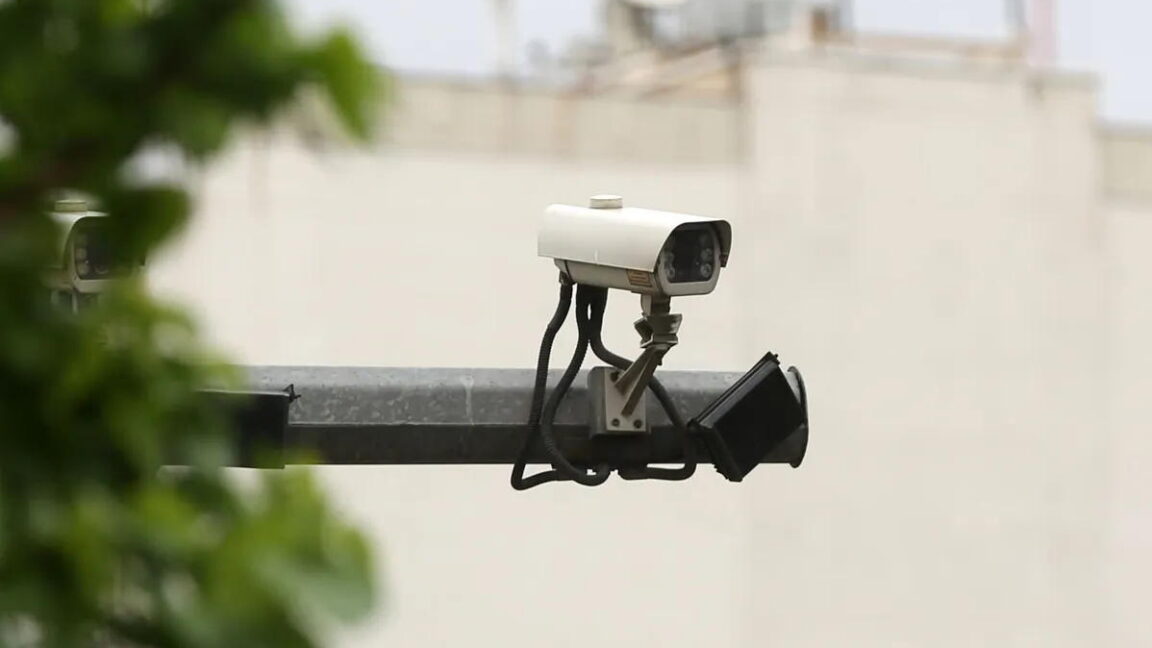
From Iran to Ukraine, Everyone's Trying to Hack Security Cameras
In an era of heightened global tensions and rapidly evolving military tactics, the humble security camera has become a prime target for hackers seeking to gain strategic advantages. From the Middle East to Eastern Europe, militaries and intelligence agencies are increasingly exploiting the vulnerability of consumer-grade surveillance devices to enhance their reconnaissance and strike capabilities.
The roots of this trend can be traced back decades, as traditional tools of war - satellites, drones, and human spotters - have been joined by a new and potentially more ubiquitous set of "eyes on the ground." The proliferation of cheap, internet-connected security cameras, often installed around homes and city streets, has provided militaries with a vast network of potential surveillance points.
According to research released by the Tel Aviv-based security firm Check Point, hundreds of hacking attempts have targeted these consumer-grade security cameras in the Middle East, often timed to coincide with Iran's recent missile and drone strikes on targets in Israel, Qatar, and Cyprus. The firm attributes many of these camera-hijacking efforts to a hacker group previously linked to Iranian intelligence, suggesting that Iran's military is actively leveraging these insecure devices to aid in its retaliatory strikes against the US and Israel.
Iran's use of this tactic is not an isolated incident. Earlier this year, the Financial Times reported that the Israeli military had gained access to "nearly all" of the traffic cameras in Iran's capital, Tehran, in partnership with the CIA. This intelligence-gathering effort was then used to help target the air strike that killed Ayatollah Ali Khamenei, Iran's supreme leader.
The conflict in Ukraine has also seen a similar dynamic unfold, with both Russian and Ukrainian forces attempting to exploit consumer surveillance cameras for strategic advantage. Ukrainian officials have long warned that Russia has hacked into these devices to gather intelligence on troop movements and target strikes, while Ukrainian hackers have reportedly hijacked Russian cameras to monitor Russian forces and, potentially, their own attacks.
The widespread adoption of this tactic speaks to the ever-evolving nature of modern warfare, where the lines between military and civilian infrastructure have become increasingly blurred. As security researcher Omri Segev Moyal of Check Point notes, "The problem is that these cameras are not meant to be part of the battlefield. They're meant to secure homes and businesses, but they're being used as part of the war effort."
This raises a host of ethical and practical concerns. The use of civilian surveillance devices for military purposes not only raises questions about privacy and the protection of innocent bystanders, but also poses significant risks in terms of escalating tensions and the potential for unintended consequences.
Moreover, the reliance on insecure consumer-grade cameras highlights the broader vulnerabilities inherent in the Internet of Things (IoT) ecosystem. As more and more devices become interconnected, the potential attack surface for malicious actors continues to grow. Experts warn that without a concerted effort to address these security flaws, the problem is only likely to become more pronounced in the years to come.
In response, governments and technology companies have taken steps to enhance the security of these devices, such as mandating the use of strong passwords, implementing encryption, and improving overall software security. However, the pace of these improvements has often struggled to keep up with the rapid proliferation of new IoT products.
As the world grapples with the implications of this emerging military tactic, it's clear that the humble security camera has become a powerful yet double-edged sword. While these devices were intended to provide peace of mind and security for homeowners and businesses, they have now become a critical component of modern warfare, with militaries and intelligence agencies seeking to exploit their vulnerabilities for strategic gain.
The ongoing conflicts in the Middle East and Eastern Europe serve as a stark reminder of the need for a comprehensive, global approach to addressing the security challenges posed by the IoT. As the lines between civilian and military infrastructure continue to blur, the stakes have never been higher, and the imperative for action has never been more pressing.
📰