
Unlocking the Secrets of Dinosaur Eggshells: A Game-Changing Approach to Dating Fossils
In the ever-evolving world of paleontology, the quest to accurately date fossils has long been a frustrating endeavor. While the layers of sedimentary rock provide a glimpse into the Earth's distant past, pinpointing the precise age of the remains trapped within them has often proven elusive. However, a recent breakthrough by a team of researchers led by paleontologist Ryan Tucker of Stellenbosch University has the potential to revolutionize the way we approach this challenge.
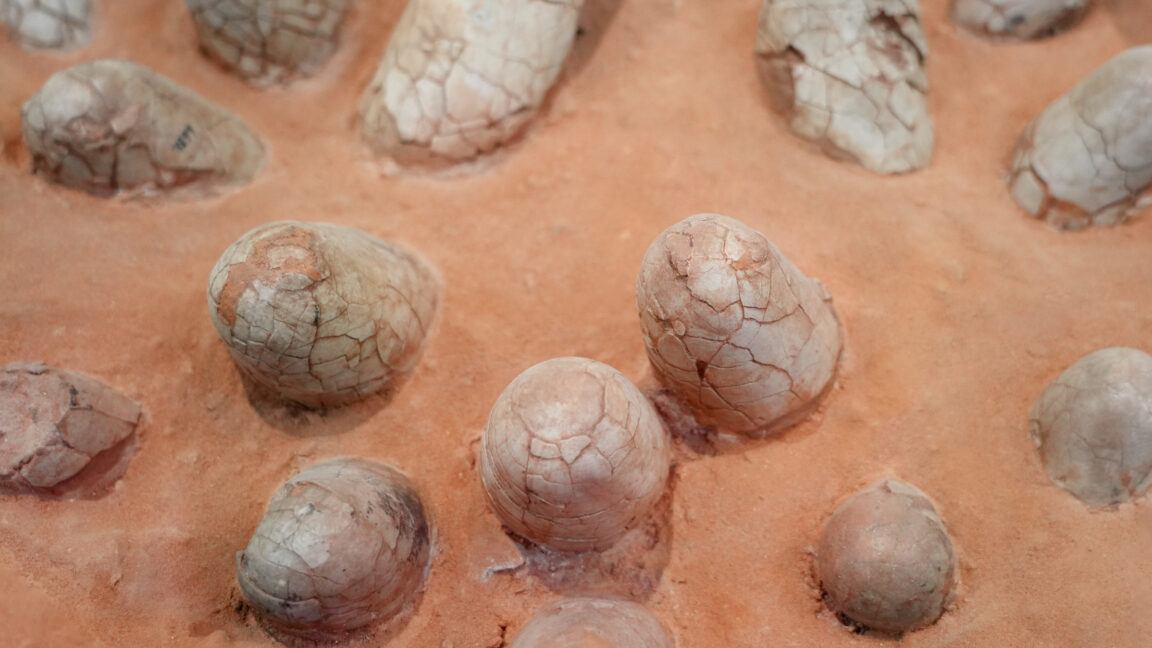
The key to this groundbreaking discovery lies in the humble dinosaur eggshell. Fossilized bones and teeth have been utilized for dating purposes in the past, but their effectiveness has been limited by the complex processes of fossilization and rock formation, which can alter the specimens in ways that interfere with accuracy. In contrast, dinosaur eggshells offer a promising new avenue for unlocking the secrets of the past.
The researchers' innovative method focuses on dating the eggshells themselves, revealing the time at which they were buried in the sediments that eventually hardened into the rock layers we see today. This information, in turn, provides a more reliable estimate of the burial time for any other fossils embedded in the same geological strata.
The significance of this discovery cannot be overstated. Accurate dating of fossils is essential for understanding the chronology of life on Earth, the evolutionary relationships between species, and the environmental conditions that shaped the planet's history. By leveraging the unique properties of dinosaur eggshells, paleontologists can now gain a more precise picture of when these ancient creatures roamed the Earth.
One of the key advantages of the eggshell dating method is its versatility. Unlike more traditional techniques, such as uranium-lead dating, which is still an emerging technology when applied to fossils, the eggshell approach can be used on a wide range of specimens. This opens up new possibilities for researchers to explore the evolution of dinosaurs and other prehistoric life across a broader spectrum of geological time periods.
Moreover, the eggshell dating method offers a more consistent and reliable alternative to the often-problematic techniques used in the past. Fossilized bones and teeth can be altered by the very processes that preserve them, making it challenging to obtain accurate age estimates. In contrast, the eggshells appear to be less susceptible to these distorting effects, providing a more stable and trustworthy foundation for dating.
The implications of this discovery extend far beyond the realm of dinosaur research. By improving our ability to date fossils, the eggshell method could have significant ramifications for our understanding of the entire history of life on Earth. Paleontologists may be able to uncover new insights into the timing and pace of evolution, the environmental factors that drove species' adaptations, and even the causes of mass extinctions.
Furthermore, the eggshell dating technique could have valuable applications in fields beyond paleontology. Geologists, for instance, may be able to use this method to better understand the formation and evolution of sedimentary rock layers, shedding light on the planet's geological history. Additionally, archaeologists may find the eggshell approach useful in dating ancient human settlements and artifacts, potentially rewriting the timelines of human civilization.
As with any groundbreaking scientific discovery, the eggshell dating method is not without its challenges. Researchers will need to refine and validate the technique, ensuring its accuracy and reliability across a range of geological contexts. Additionally, the availability and preservation of suitable eggshell specimens may pose logistical hurdles, requiring careful excavation and curation practices.
Despite these potential obstacles, the excitement surrounding the eggshell dating breakthrough is palpable. Paleontologists and researchers from related fields are eagerly anticipating the opportunities this new approach will open up, as they work to unlock the secrets of the past and deepen our understanding of the evolution of life on our planet.
In conclusion, the discovery of a reliable method for dating dinosaur eggshells represents a significant milestone in the field of paleontology. By providing a more accurate and consistent way to determine the age of fossils, this innovative technique has the potential to transform the way we study the history of life on Earth. As researchers continue to explore the full implications of this breakthrough, we can look forward to a future where the mysteries of the distant past are unveiled with greater clarity and precision.
📰