
A British Redcoat's Lost Memoir Resurfaces, Revealing the Hardships of Disabled Veterans
In the annals of the War of 1812, few figures have captured the public's imagination quite like Shadrack Byfield, a British redcoat who lost his left arm to a musket ball in the heat of battle. Byfield's stoic perseverance in the face of adversity has been immortalized in children's books and documentary films, cementing his status as a shining example of a disabled soldier's resilience. However, a newly rediscovered memoir penned by Byfield himself in his later years is now complicating this idealized portrayal of his post-military life, shedding light on the challenges and struggles faced by many disabled veterans of the era.
Born in 1789 in the suburbs of Bradford-on-Avon, Wiltshire, Byfield was initially intended by his parents to follow in the footsteps of his weaver father. However, at the age of 18, he enlisted in the county militia, joining the regular army the following year. As the War of 1812 erupted, Byfield found himself stationed at Fort George along the Niagara River, where he participated in the successful siege of Fort Detroit.
It was during the Battle of Frenchtown in January 1813 that Byfield's life took a dramatic turn. While engaged in the fierce fighting, he was shot in the neck, a wound that would ultimately cost him his left arm. Despite the severity of his injury, Byfield managed to recover sufficiently to join the subsequent campaigns against Fort Meigs and Fort Stephenson in Ohio.
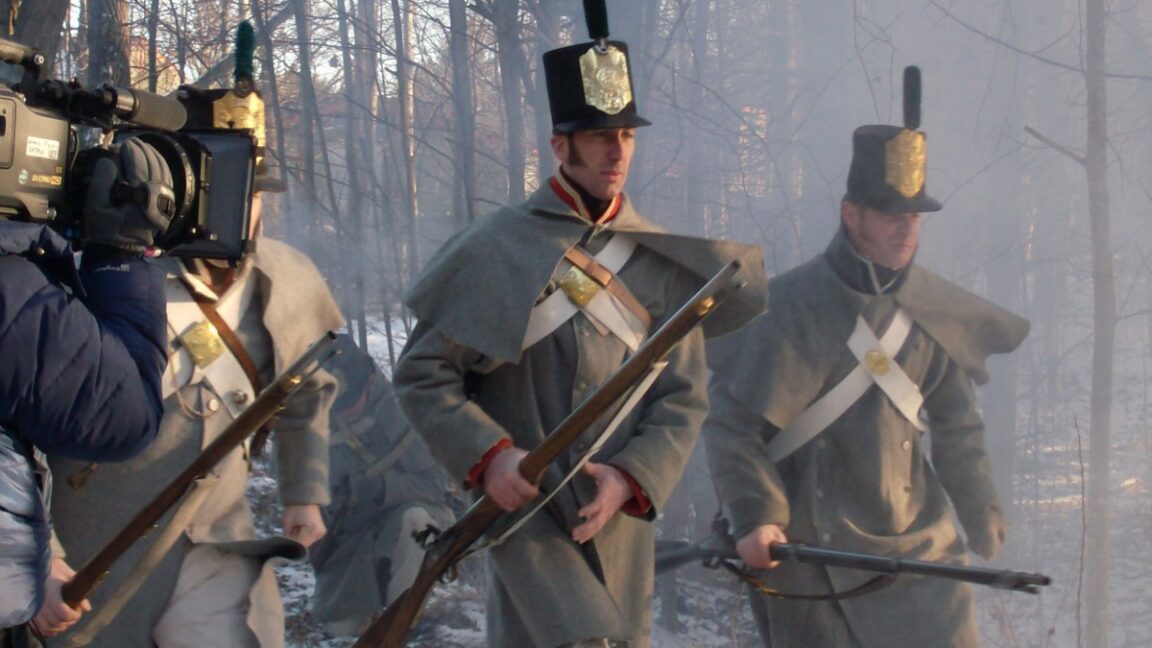
Byfield's story of resilience and perseverance in the face of adversity has long captured the public's imagination. His exploits have been featured in numerous historical accounts, including the 1985 children's novel "Redcoat" by Gregory Sass and a 2011 PBS documentary. These portrayals have often presented Byfield as a stoic, unwavering hero, a shining example of the British soldier's grit and determination.
However, the newly rediscovered memoir, which Byfield published in his later years, is now shedding new light on the challenges he faced in his post-military life. According to Eamonn O'Keeffe, a historian at Memorial University of Newfoundland, the memoir offers a more complex and nuanced understanding of Byfield's experiences, complicating the idealized picture that has long been presented.
O'Keeffe, who has been a Byfield enthusiast ever since reading "Redcoat," has been instrumental in bringing this previously overlooked memoir to light. "There are dozens of memoirs written by British rank-and-file veterans of the Napoleonic Wars, but only a handful from the War of 1812, which was much smaller in scale," O'Keeffe told Ars Technica. "Byfield's autobiography seemed to offer an authentic, ground-level view of the fighting in North America, helping us look beyond the generals and politicians and grapple with the implications of this conflict for ordinary people."
The memoir's rediscovery is particularly significant given the paucity of first-hand accounts from British rank-and-file soldiers who fought in the War of 1812. While the war may have been overshadowed by the larger Napoleonic conflicts, it nevertheless had a profound impact on the lives of the men who fought in it, including the disabled veterans like Byfield.
The memoir's revelations challenge the heroic narrative that has long surrounded Byfield, painting a more complex and nuanced picture of his post-war experiences. Rather than a straightforward tale of stoic perseverance, the memoir delves into the difficulties Byfield faced in navigating the social and economic landscape as a disabled veteran.
The implications of this newfound understanding extend beyond the individual case of Shadrack Byfield. It sheds light on the broader challenges faced by disabled soldiers in the aftermath of the War of 1812, a conflict that has often been overshadowed by the Napoleonic Wars in the public consciousness.
As O'Keeffe notes, the memoir offers a rare "ground-level view" of the war's impact on ordinary people, providing a valuable counterpoint to the more prominent narratives focused on generals and politicians. By delving into the personal experiences of a rank-and-file soldier like Byfield, the memoir humanizes the historical record, reminding us of the very real human toll of armed conflict.
The rediscovery of Byfield's memoir is a significant development in the ongoing efforts to understand the War of 1812 and its lasting impact. It serves as a powerful reminder that even the most celebrated figures of history often faced formidable challenges and hardships, and that the stories of ordinary soldiers can offer valuable insights into the human experience of war.
As historians and the public continue to grapple with the legacy of the War of 1812, the resurfacing of Byfield's memoir provides a vital counterpoint to the more heroic narratives that have long dominated the historical discourse. By shedding light on the difficulties faced by disabled veterans in the aftermath of the conflict, the memoir offers a poignant and thought-provoking perspective on the human cost of war.
📰


