
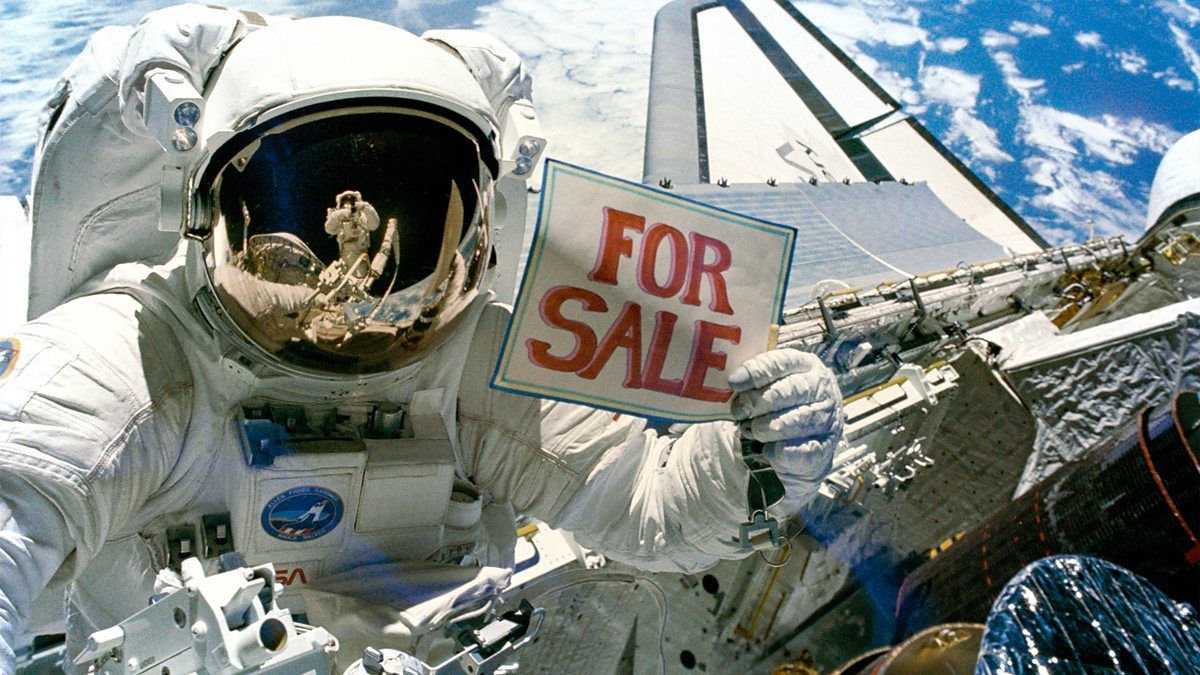
As our planet revels in the recent achievements of this spring’s Artemis 2 mission and its four astronaut crew members, a new four-part PBS documentary series takes a scrutinizing look at space exploration and its inherent perils and promises. "Once Upon a Time in Space" will be available to watch on PBS (and the PBS app) starting on July 14, 2026 (9pm ET).
Directed by James Bluemel and his filmmaking team — the crew behind the award-winning "Once Upon a Time in Northern Ireland" and "Once Upon a Time in Iraq" — "Once Upon a Time in Space" explores the connections between those venturing beyond Earth's gravity and the support staff remaining behind while pioneering souls venture into hostile outer space territory.
"'Once Upon a Time in Space' tells the human stories behind one of our most extraordinary endeavors: the exploration of space," states the official synopsis. "Moving beyond scientific achievement, the series examines the personal experiences of astronauts, cosmonauts, ground-based participants, and the loved ones left on Earth. Across four episodes, it traces significant landmarks in spacefaring history, from the birth of the Shuttle and the pioneering Space Station Mir to the rise of commercial spaceflight."
"Once Upon a Time in Space" launches on PBS on July 14 (Image credit: PBS/BBC)"Through powerful firsthand testimony and intimate, unseen archival footage, a complex portrait of humanity emerges: one that lays bare both our fragility and boundless curiosity. Accounts of bravery, friendship, and tragedy are told against the backdrop of a rapidly changing world, connecting technical and geopolitical developments to those who experienced them."
Here’s a schedule of the docuseries’ chapters and their slated air dates:
Episode 1 "America First" – Tuesday, July 14 – 9:00 p.m. ETEpisode 2 "The Russian Thing" – Tuesday, July 21Episode 3 "Politics Always Wins" – Tuesday, July 28Episode 4 "Friends Forever" – Tuesday, August 4This remarkable show features NASA astronauts Charlie Bolden, Anna Lee Fisher, Bill Fisher, Michael Foale, Jerry Linenger, Mike Mullane, Dan Tani, and Terry Virts. They’re joined by cosmonauts Sergei Zalyotin and Alexander ‘Sasha’ Lazutkin, NASA officials, aerospace engineers, and numerous family members.
Produced in collaboration with the BBC, "Once Upon a Time in Space" was first broadcast last fall in the UK, but now makes its U.S. premiere at 9:00 p.m. ET on PBS, PBS.org and the PBS app.
📰


