
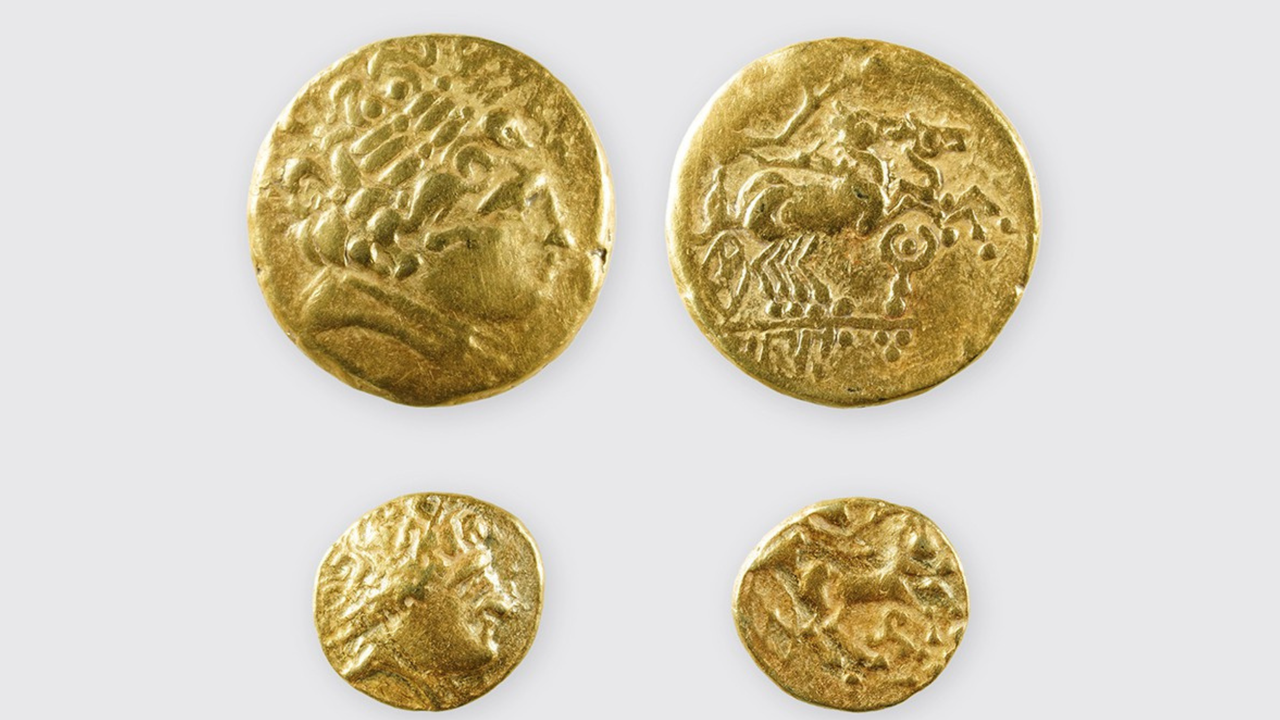
2,300-year-old Celtic Gold Coins Discovered in Swiss Bog
In a remarkable archaeological find, two rare Celtic gold coins have been uncovered in a remote Swiss bog, providing valuable insights into the ancient culture and traditions of the region. The coins, dating back over 2,300 years, were discovered by a team of researchers conducting a survey of the wetland area, shedding new light on the beliefs and practices of the Celtic people who once inhabited the area.
The discovery of these ancient coins is significant not only for their rarity and historical value but also for the context in which they were found. Located in a secluded bog, the coins were likely intentionally placed there as an offering to the gods or spirits believed to inhabit such sacred wetland spaces. This practice of votive deposition, where valuable items were submerged in bogs, lakes, or rivers as a form of ritual sacrifice, was common among Celtic communities throughout Europe during the Iron Age.
"These coins are a remarkable find that helps us better understand the religious and cultural practices of the Celtic people in this region," said Dr. Lucia Baldi, the lead archaeologist on the project. "The fact that they were discovered in a bog suggests they were purposefully deposited as an offering, likely to honor or appease the deities associated with the wetland environment."
The two gold coins, known as staters, are remarkably well-preserved, with intricate designs and inscriptions still clearly visible. One of the coins features a stylized image of a human head on the obverse, a common motif in Celtic coinage, while the reverse depicts a horse, a significant symbol in Celtic mythology and iconography. The other coin showcases a more abstract design, with concentric circles and geometric patterns characteristic of Celtic art.
Analyses of the coins' composition and minting techniques have revealed that they were likely produced in the Helvetii region, a Celtic tribe that inhabited what is now Switzerland during the late Iron Age. The Helvetii were known to be skilled metalworkers and coin producers, and their coins were widely circulated throughout the Celtic world.
The discovery of these coins in the Swiss bog is particularly exciting, as it provides a rare glimpse into the religious and ritual practices of the Helvetii people. Bogs and other wetland environments were often considered sacred spaces, where the boundary between the physical and spiritual worlds was believed to be thinnest. By depositing valuable objects like these gold coins, the Celts were likely seeking to make offerings and communicate with the divine powers they associated with these liminal landscapes.
"The placement of these coins in the bog suggests a deep reverence for the natural environment and a belief in the spiritual significance of these wetland spaces," Baldi explained. "It's a fascinating glimpse into the worldview and religious practices of the Celts, who saw the natural world as imbued with supernatural forces and deserving of ritual veneration."
The discovery of the Celtic gold coins has generated significant excitement within the archaeological community, as it represents a rare and valuable addition to the limited corpus of Celtic material culture that has survived from the ancient world. The coins will undergo further analysis and conservation efforts before being added to the collection of a local museum, where they will be available for public viewing and scholarly study.
"These coins are a true treasure trove, not just for their material value but for the insights they provide into the rich cultural and religious traditions of the Celtic people," said Baldi. "Their discovery in the Swiss bog is a testament to the ongoing efforts of archaeologists to uncover and preserve the stories of the past, and to better understand the diverse ways in which ancient societies engaged with the natural world around them."
As the research team continues to explore the surrounding wetland area, they remain hopeful that additional artifacts or evidence may come to light, further illuminating the lives and beliefs of the Helvetii and their Celtic contemporaries. The recovery of these two remarkable gold coins has already sparked renewed interest in the region's ancient history, and the promise of future discoveries only heightens the anticipation of what this remarkable site may yet reveal.
📰


