
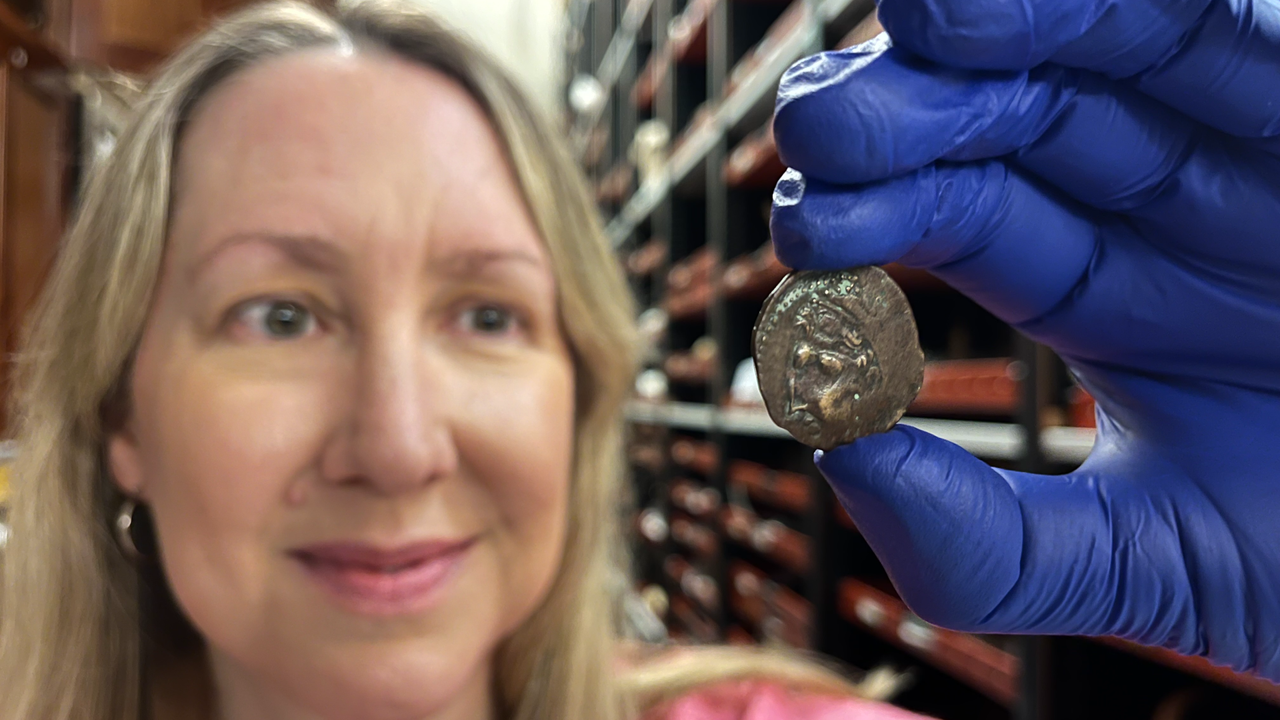
2,000-year-old Phoenician coin was used as bus fare in England, but 'how it got there will always be a mystery' The ancient coin was probably minted in what is now Spain in the first century B.C., but no one knows why it was used to pay a 1950s transport fare.

Discover more articles based on similar topics and interests

Researchers at the University of Manchester have used artificial intelligence to uncover a complex picture behind England's long-running productivity puzzle, challenging the idea that the country's economic performance can be explained by a simple North-South divide.

Going from serving the nation to serving a prison sentence As Australia faces renewed strategic tension and the heightened prospect of conflict abroad, new Flinders University research warns that many veterans and their families—the very people relied upon to protect the nation—are being failed...

Fifty years of measuring the world's cleanest air Australia marks 50 years of monitoring the world's cleanest air in remote northwest Tasmania at Kennaook / Cape Grim Baseline Air Pollution Station, supporting global efforts to track human-driven changes to the atmosphere.

Rethinking Europe's nature reserves Natura 2000 is regarded as a milestone in nature conservation: this network of around 27,000 protected areas across the EU is designed to preserve wild plant and animal species and their habitats.

Mercury scout mission concept with solar sail propulsion The planet Mercury is the closest planet to the sun, and also the most difficult for spacecraft to visit and explore. This is because as spacecraft get closer to Mercury, the sun's enormous gravity pulls in the spacecraft, greatly increasing...

Why is the Artemis 2 rocket launch different from all other rocket launches? That's one small sip of Manischewitz…