
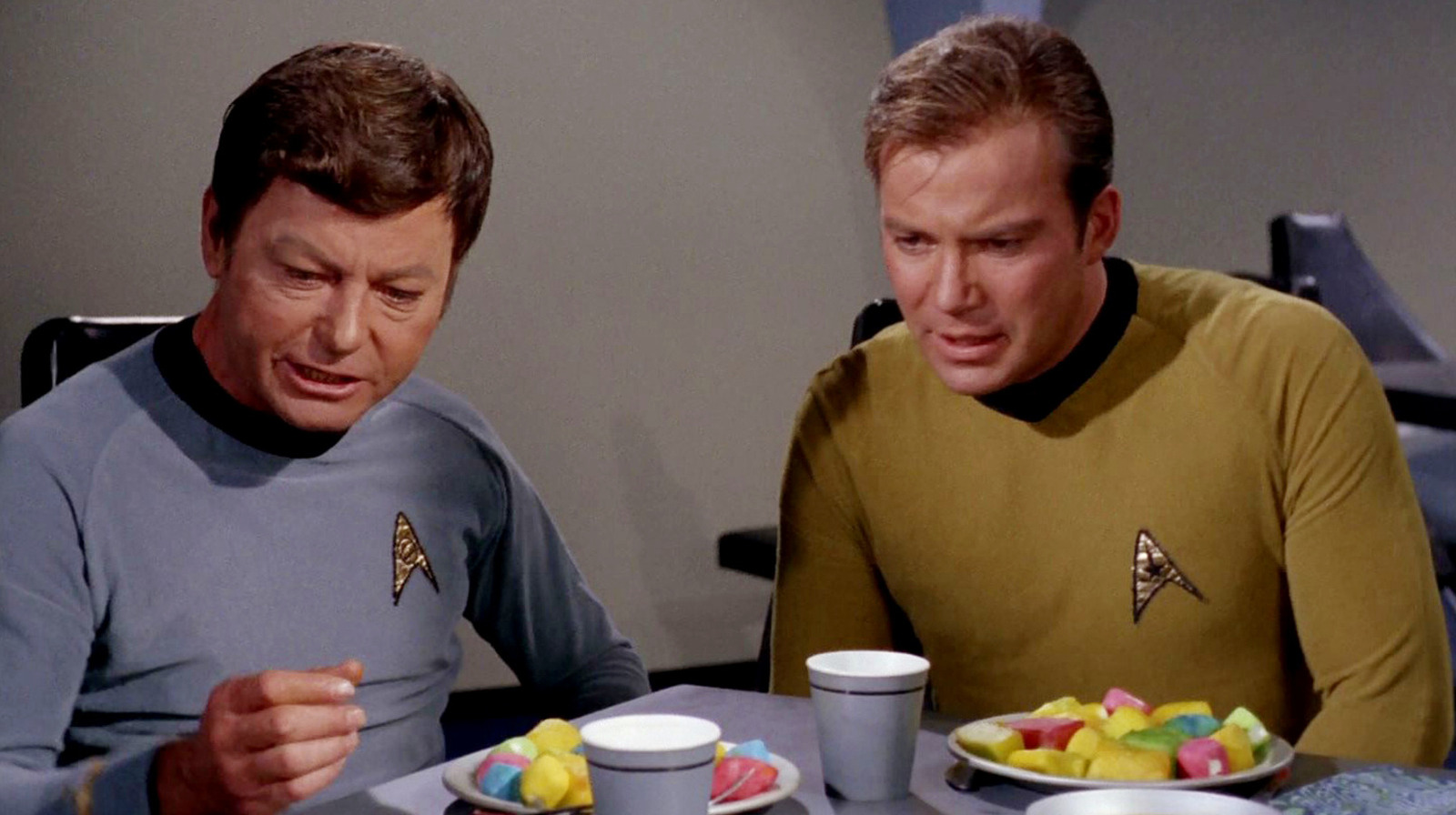
The Orville Creator Seth MacFarlane Defends the Importance of Star Trek's Replicators
In the expansive universe of science fiction, few technologies have captured the public's imagination quite like the replicator - the advanced matter synthesizers of the Star Trek franchise. However, not everyone has been enamored with this iconic piece of futuristic equipment. Recently, comments from a former Star Trek writer sparked a debate around the role of replicators, prompting a response from Seth MacFarlane, the creator of the Star Trek-inspired series The Orville.
The controversy began when former Star Trek: Voyager writer Kenneth Biller expressed his distaste for the replicator, describing it as a "cheat" that undermined the creative challenges faced by the show's characters. Biller argued that the ease with which the replicator could produce any desired object removed the need for resourcefulness and problem-solving, two key elements that had traditionally driven the narrative in Star Trek.
"The replicator was a cheat," Biller stated in an interview. "It made it too easy. It removed the need to be creative and resourceful in terms of obtaining the things you needed. You could just say, 'Computer, give me a pastrami sandwich,' and there it was. I always found that a bit of a cop-out."
Biller's comments struck a chord with some Star Trek fans, who agreed that the replicator's convenience could diminish the sense of scarcity and challenge that had often defined the franchise's storylines. The idea of a future where any material good could be easily obtained with the push of a button seemed to clash with the series' underlying themes of exploration, problem-solving, and the human condition.
However, Seth MacFarlane, the creator of the critically acclaimed series The Orville, found himself firmly on the other side of the debate. MacFarlane, who has long been a vocal fan of Star Trek, argued that the replicator was an essential element of the franchise's futuristic vision.
"I respectfully disagree with Kenneth Biller's assessment of the replicator," MacFarlane said in a statement. "The replicator was a key part of what made the Star Trek universe so compelling and believable. It was a reflection of a future where the basic needs of humanity had been met, freeing the characters to focus on exploration, discovery, and the advancement of their species."
MacFarlane's perspective highlights the complex role that the replicator has played in the Star Trek narrative. While Biller's concerns about the technology's potential to remove creative challenges are valid, MacFarlane sees the replicator as a crucial component of the franchise's larger vision of a technologically advanced, resource-abundant future.
"The replicator wasn't just a plot device," MacFarlane explained. "It was a symbol of a society that had moved beyond the constraints of scarcity and material need. It allowed the characters to devote themselves to the pursuit of knowledge, diplomacy, and the betterment of humanity - goals that were central to the core of Star Trek."
Indeed, the replicator has been a vital part of the Star Trek universe since its inception. First introduced in the original series, the technology evolved over the course of subsequent shows and films, becoming a ubiquitous fixture in the daily lives of the franchise's characters.
From Captain Picard's iconic "Tea, Earl Grey, hot" to Janeway's fondness for coffee, the replicator has provided a convenient, if occasionally problematic, means for the characters to obtain the necessities of life. Its presence has allowed the series to focus on the more cerebral and philosophical aspects of the human experience, rather than being bogged down by the logistical challenges of survival.
MacFarlane's defense of the replicator highlights the broader significance of this technology within the Star Trek universe. By freeing the characters from the constraints of material scarcity, the replicator has enabled the franchise to explore more profound questions about the nature of humanity, the ethics of technology, and the potential for a better future.
"Star Trek has always been about more than just the hardware and technology," MacFarlane said. "It's about the human condition, about our capacity for growth, exploration, and the pursuit of knowledge. The replicator was a key part of that vision, a symbol of a future where humanity's basic needs had been met, allowing us to focus on the higher callings that define us as a species."
While the debate around the replicator's role in Star Trek is unlikely to be resolved anytime soon, MacFarlane's perspective offers a compelling counterpoint to Biller's criticisms. By recognizing the replicator as a vital component of the franchise's larger thematic and narrative objectives, MacFarlane reminds us that the true power of science fiction lies not just in its technological innovations, but in its ability to inspire us to imagine a better, more equitable world.
📰


